
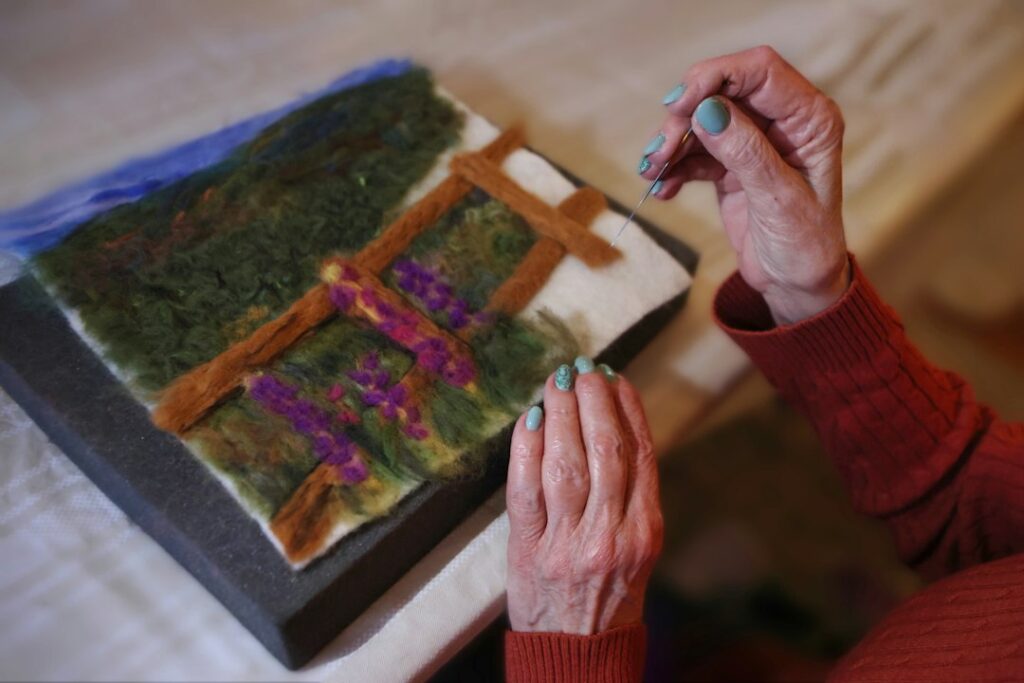
Creative activities can help assisted living residents stay engaged, express themselves, and maintain everyday skills. Hobbies do not need to be complicated, expensive, or physically demanding to provide meaningful enjoyment.
For residents in Carlisle, PA, the best activities are often those that can be adapted to changing energy levels, shared with neighbors, and enjoyed indoors during cold winter days or periods of hot, humid weather.
Which creative hobbies work well in assisted living?
The most suitable hobbies are safe, flexible, and easy to adjust. Activities should allow residents to participate independently, with a small group, or with assistance from staff, family members, or visitors.
Useful options include:
- Drawing, coloring, and painting
- Simple crafts and seasonal decorations
- Writing, journaling, and storytelling
- Music, singing, and rhythm activities
- Gardening with containers or indoor plants
- Photography and memory-based projects
- Sewing, knitting, crocheting, or fabric crafts
- Cooking-related activities that do not require unsafe kitchen tasks
A resident does not need prior artistic experience. The value often comes from the process: choosing colors, handling materials, remembering familiar routines, or sharing a finished project with someone else.
Are art activities helpful for residents with limited mobility?
Yes. Many creative hobbies can be completed while seated at a table, in a recliner, or in a wheelchair. Materials can be placed within comfortable reach, and projects can be divided into short steps.
Drawing and coloring may be adapted with larger paper, thick-handled pencils, easy-grip markers, or paintbrushes with built-up handles. A tabletop easel can make it easier for someone who has difficulty bending over a flat surface.
Residents with limited hand strength may enjoy:
- Collage projects using pre-cut paper
- Sticker art and greeting cards
- Large-piece puzzles with artistic designs
- Painting with sponges or broad brushes
- Arranging artificial flowers
- Decorating picture frames
- Selecting colors while another person handles cutting or gluing
The goal is participation rather than perfection. A project can be successful even if the resident completes only one part of it.
What creative hobbies may support memory and conversation?
Memory-based activities can encourage conversation without turning the hobby into a test of recall. Familiar subjects are often more comfortable than unfamiliar instructions.
Residents may enjoy creating:
- Family memory books
- Photo collages
- Personal timelines
- Recipe cards based on favorite meals
- Seasonal scrapbook pages
- “Favorite places” or “important people” boards
- Short written memories about school, work, holidays, or hobbies
A conversation can begin with a photograph, fabric pattern, song, or household object. Questions should be open-ended and relaxed, such as “What does this remind you of?” or “Did you ever make something like this?”
For residents living with dementia, avoid correcting every detail. The activity should support comfort and connection rather than measure accuracy.
How can music become a creative activity?
Music offers several ways to participate, including listening, singing, moving to rhythm, and recalling songs from earlier periods of life. A resident does not need to play an instrument to take part.
Simple music activities include:
- Group sing-alongs
- Handheld rhythm instruments
- Tapping along to familiar songs
- Creating playlists around a theme
- Discussing music connected to holidays or life events
- Reading short poems or lyrics aloud
- Making simple homemade instruments from safe materials
Music sessions should allow residents to opt out or listen quietly. Some people enjoy music more when the volume is moderate and the group is small.
Seasonal music can also help residents mark the year. Familiar songs may be especially welcome during winter gatherings, spring celebrations, summer activities, or autumn events.
Are gardening hobbies possible indoors?
Indoor gardening can be practical in assisted living, especially when outdoor conditions are uncomfortable or access to garden spaces is limited. Container gardening allows residents to observe growth and take part in a regular routine.
Good choices may include:
- Small pots of herbs
- Low-maintenance houseplants
- Seed-starting projects
- Arranging cut flowers
- Decorating plant containers
- Observing leaves, blossoms, or seasonal changes
- Creating a tabletop nature display
Plants should be selected with attention to allergies, watering needs, toxicity concerns, and the resident’s ability to handle soil or water. Lightweight containers may be easier to move. A tray underneath can help prevent spills.
In Carlisle, changing seasons can provide natural themes for creative projects. Residents might paint leaves, make paper flowers, decorate containers, or keep a simple observation journal about plants near windows or shared outdoor areas.
What hobbies can residents enjoy with family members?
Shared projects often create more conversation than passive visits. Family members can bring photographs, fabric scraps, old greeting cards, recipes, or other safe materials connected to the resident’s interests.
Projects that work well together include:
- Decorating holiday or birthday cards
- Organizing photographs
- Making a family recipe booklet
- Creating a simple quilt square
- Painting flowerpots
- Recording family stories
- Building a memory box
- Making paper decorations for a resident’s room

The project should match the resident’s stamina. A visit may be more enjoyable when it includes a 20-minute activity rather than an ambitious project that leaves the person tired or frustrated.
Children and grandchildren can participate by sorting colors, asking questions, or displaying finished work. Supervision is needed when projects involve small pieces, sharp tools, adhesives, or materials that could be swallowed.
How can hobbies be adapted for vision, hearing, or memory changes?
Creative activities should be modified to match the resident’s current abilities. A hobby that was once easy may become tiring or confusing if instructions, tools, or surroundings are not adjusted.
Helpful changes include:
- Using strong contrast between materials and work surfaces
- Providing large-print instructions
- Offering one step at a time
- Limiting the number of materials on the table
- Demonstrating instead of giving lengthy explanations
- Reducing background noise
- Using good lighting without glare
- Providing rest breaks
- Offering hand-over-hand guidance only with the resident’s permission
For someone with hearing loss, face the resident while speaking and reduce competing sounds. For someone with vision loss, describe materials clearly and use textures, larger objects, or audio-based activities.
What safety issues should be considered?
Creative hobbies should be reviewed for fall, choking, burn, cut, allergy, and infection risks. Materials need to be appropriate for the resident’s health conditions and level of supervision.
Potentially risky items include:
- Sharp scissors, needles, or craft blades
- Hot glue guns
- Small beads or buttons
- Solvents, strong adhesives, and aerosol products
- Loose soil or standing water
- Hot cooking equipment
- Materials with strong odors
Safe alternatives may include blunt-tip scissors, washable glue, large beads, pre-cut materials, battery-operated lights, and no-cook food preparation. Staff or family assistance may be needed for tasks involving heat, cutting, lifting, or chemical products.
Residents should also be allowed to stop. Fatigue, pain, frustration, or sensory overload are signs that the activity needs a pause or a simpler approach.
How can a hobby become part of daily life?
A creative hobby is more likely to continue when it has a predictable place in the daily or weekly routine. A small activity basket can hold supplies for drawing, writing, knitting, or collage work.
Residents may prefer:
- Ten-minute activities after breakfast
- A regular afternoon art table
- Music before or after meals
- Gardening on a set day each week
- Seasonal decorating projects
- Quiet individual hobbies during rest periods
Finished work can be displayed in the resident’s room, shared with family, or used to decorate a common area if the resident wants that. The most meaningful result may not be a finished object. It may be a conversation, a familiar routine, a moment of concentration, or the feeling of contributing to the community.
